Books by splitShops
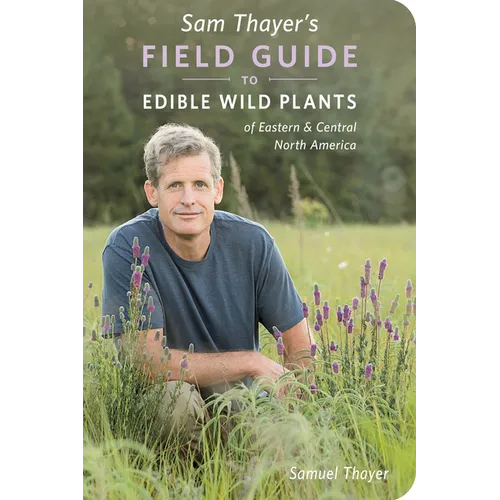
Sam Thayer's Field Guide to Edible Wild Plants — Eastern & Central North America (Paperback)
Sam Thayer's Field Guide to Edible Wild Plants — Eastern & Central North America (Paperback)
Couldn't load pickup availability
Region covered: Eastern & Central North America. If you forage in the Midwest, the Northeast, the Southeast or the central states, this is written for your plants. If you forage in the Pacific Northwest, California or the Southwest, choose a guide for your region instead.
by Samuel Thayer (Author)
Eastern North America is one of the richest foraging landscapes in the world, with a wild abundance of fruits, berries, nuts, roots, tubers, shoots, flowers, seeds and leafy greens. The most comprehensive regional guide ever written, it contains detailed descriptions, range maps and sharp color photographs of 700 edible species as well as some of the most troublesome toxic plants. Thayer's identification system uses everyday language accessible to beginning and advanced foragers alike, and is designed to stand alone or work alongside phone-based identification apps to confirm a positive ID before a plant is eaten. Each entry covers habitat, conservation, edible parts, seasons of harvest and methods of preparation.
About the author
Samuel Thayer is an internationally recognized authority on edible wild plants who has taught classes and workshops around the United States for almost three decades. His previous award-winning foraging books have sold more than 300,000 copies.
Details
- 736 pages, illustrated
- 8.7 × 6.3 × 2.2 in
- Published June 1, 2023
Ships with any other book here. Nearly every book in the Homestead Library comes from the same supplier, so shipping on three costs the same as shipping on one — which matters here, because the safety note below is a good argument for owning two guides. Browse the full Library.
Safety note: never eat a wild plant or mushroom identified from a single source. Cross-reference with a second guide and, where you can, a knowledgeable local forager. Misidentification can be serious and in some cases fatal.
Share